
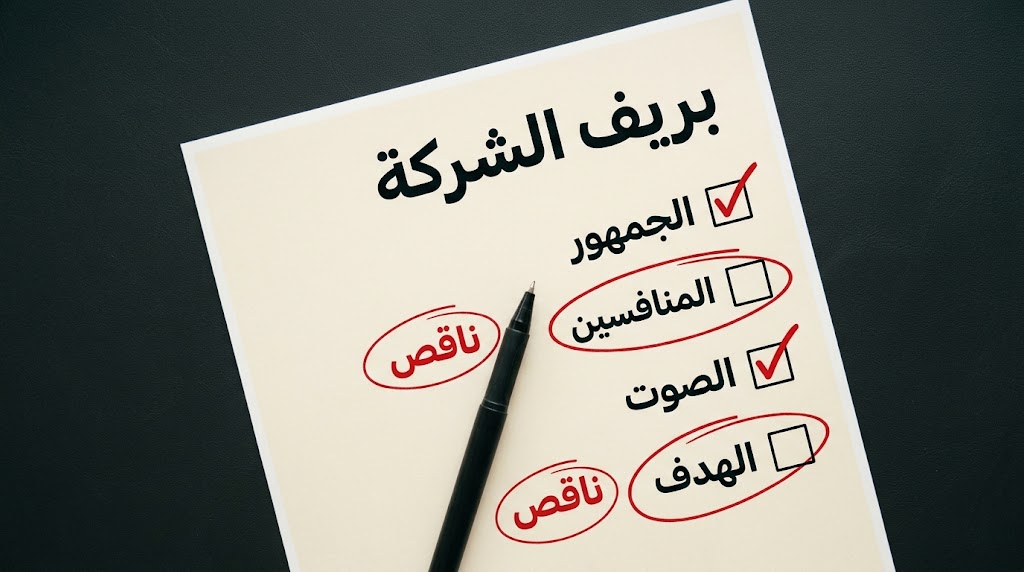
Define the target customer through an observable situation, problem, and behaviour—not invented demographics. Correct the hypothesis with evidence.
We made this mistake ourselves. Our strategy file said the primary audience was “an existing business owner.” Then we returned to a real conversation and found the person behind the example had clearly described the business as “under formation.” We had classified the customer using the picture in our heads, not their words.
We corrected the file. More importantly, we saw how one contradiction could distort content, product, and sales pages.
What is a target customer?
A target customer is a group sharing a situation, problem, and buying motivation that you can serve and reach. Age, gender, and city can help later, but they do not explain why someone buys now.
Why do traditional personas fail?
They become fiction: “Ahmed, 32, drinks coffee and uses Instagram.” Every detail may be true and still say nothing about need.
A useful description is behavioural: “An Arab founder with an idea or business under formation, uncertain about the next step, who wants to build with AI instead of hiring a team too early.”
Which questions reveal the real customer?
- What happened when they began searching?
- What did they try first?
- What does delay cost them?
- Which words do they use for the problem?
- What creates trust or hesitation?
- Who decides, pays, and uses?
Ask for the story of the last occurrence. Repeated language informs content; observed behaviour reveals whether the pain is real.
How do you start without customers?
Create a narrow hypothesis based on a market you know or can reach. Interview people matching the situation, not only friends. Track the problem, trigger, alternative, objection, and exact phrase. Do not turn one interview into an entire market.
How should AI systems use the customer definition?
Store it in a shared company brief read by every AI employee before work. Include what remains unknown so the model does not turn missing context into assumed fact. That shared file is a core Founders OS rule.
Start with the free diagnosis, then build the shared business context in Founders OS.
Regional source: Monsha’at on discovering a target market with data.
Frequently asked questions
What is the difference between a target audience and ideal customer?
A target audience is broader; the ideal customer is the segment with the strongest fit and mutual value.
Does age matter?
It matters when it changes behaviour, access, or buying power, but it is insufficient without the situation and problem.
How do I define a customer without sales history?
Start with a narrow hypothesis, interview people matching the situation, and correct the description using stories and behaviour.
Can I have multiple target segments?
Yes, but begin with one primary segment and message. Split segments when the pain or buying decision differs.
From reading to execution
Market selection employee · one of 19 employeesBuild the customer definition from evidence.
It captures the situation, problem, and observable behaviour, then stores the definition in the company file every employee reads.
The article explained the problem. Founders OS gives you the employee and files to apply the solution to your business.
Get it — $29 One payment · 58 files · instant delivery · you own the files · requires Claude